Tag: Monsoon driving tips

  • Buy Tata Nexon or Maruti Brezza This Monsoon? See Which SUV Is Safer on Waterlogged Roads Before Booking

    Buy Tata Nexon or Maruti Brezza This Monsoon? See Which SUV Is Safer on Waterlogged Roads Before Booking

    Tata Nexon or Maruti Brezza Looking for the safest SUV for the rainy season? Here’s a detailed comparison of the Tata Nexon and Maruti Brezza, covering safety, ground clearance, features, and value for buyers planning to drive during heavy monsoon conditions.

    Tata Nexon vs Maruti Brezza: Which SUV Is Better for Monsoon Driving?

    The monsoon season makes driving more challenging, especially in cities where waterlogged roads, potholes, and reduced visibility become common. Therefore, choosing an SUV with strong safety features and good ground clearance becomes more important than ever. Among buyers with a budget of up to ₹15 lakh, the Tata Nexon and Maruti Brezza continue to be two of the most popular compact SUVs.

    Both models offer practical features, comfortable cabins, and reliable performance for daily use. However, they differ in areas such as ground clearance, safety equipment, and convenience features. If you frequently drive during heavy rain, this comparison will help you make a smarter buying decision.

    Tata Nexon vs Maruti Brezza Safety Features

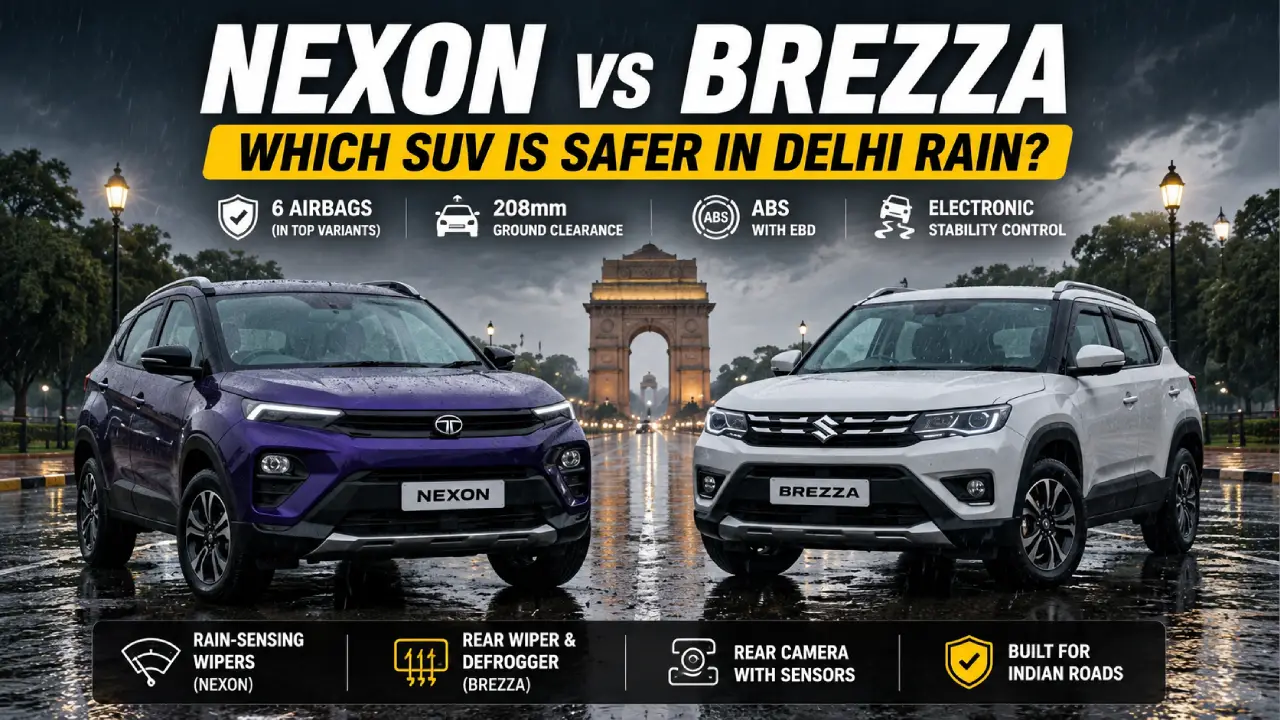
    Safety remains one of the biggest reasons buyers consider these two SUVs. Tata equips the Nexon with six airbags as standard across all variants, giving buyers additional peace of mind regardless of the model they choose. Moreover, Electronic Stability Control (ESC), ABS with EBD, and other active safety systems help improve vehicle stability on slippery roads.

    Meanwhile, the Maruti Brezza also offers a strong safety package. However, six airbags are available only on higher variants, while lower trims come with fewer airbags. The Brezza still includes Electronic Stability Control and hill-hold assist in selected variants, making it a dependable option for urban driving.

    As a result, buyers who prioritize standard safety equipment may find the Nexon slightly more attractive.

    Ground Clearance and Waterlogged Road Performance

    One of the biggest concerns during the rainy season is driving through flooded streets. Ground clearance plays a major role because it helps reduce the chances of the vehicle’s underbody touching uneven roads or shallow water.

    The Tata Nexon offers an impressive 208 mm ground clearance, while the Maruti Brezza provides 198 mm. Although the difference appears small on paper, the additional clearance can be helpful when crossing speed breakers, potholes, and mildly flooded roads.

    However, drivers should remember that no passenger SUV is designed for deep water crossings. It is always safer to avoid roads where water levels rise above the wheel hubs, regardless of the vehicle.

    Feature Tata Nexon Maruti Brezza
    Ground Clearance 208 mm 198 mm
    Standard Airbags 6 Airbags 2 Airbags (base variants)
    Electronic Stability Control Available Available
    Rain-Sensing Wipers Available on higher variants Manual wipers

    Braking, Visibility and Driving Confidence

    Driving safely during heavy rainfall depends on more than just braking power. Visibility is equally important. The Tata Nexon offers rain-sensing wipers on selected variants, allowing the system to adjust wiping speed automatically according to rainfall intensity. Consequently, drivers can focus more on the road instead of manually changing wiper settings.

    On the other hand, the Maruti Brezza features effective rear wipers, a rear defogger, and parking assistance in higher variants. These features improve visibility while reversing during rain or foggy conditions.

    Moreover, both SUVs deliver stable braking performance through ABS and Electronic Stability Control, helping maintain better control during emergency braking on wet roads.

    Comfort, Practicality and Ownership Experience

    Beyond safety, buyers also consider comfort and ownership costs. The Tata Nexon offers a modern cabin, connected technology, and a premium interior feel. Additionally, its higher driving position provides a confident view of the road during heavy traffic.

    Meanwhile, the Maruti Brezza continues to attract customers because of its refined petrol engine, smooth city performance, and widespread service network across India. Furthermore, Maruti’s lower maintenance costs and strong resale value remain major advantages for long-term ownership.

    If you mostly drive within the city and value hassle-free maintenance, the Brezza remains a practical choice. However, buyers looking for stronger standard safety equipment may prefer the Nexon.

    Price and Which SUV Offers Better Value?

    Both SUVs fall comfortably within the ₹10 lakh to ₹15 lakh price bracket, depending on the chosen variant. Finance options, exchange bonuses, and dealer offers may further reduce the effective purchase cost.

    While Tata Nexon offers more standard safety features and slightly better ground clearance, the Maruti Brezza counters with excellent reliability, fuel efficiency, and one of India’s largest service networks. Therefore, the better choice depends largely on your driving priorities.

    Final Verdict: Tata Nexon or Maruti Brezza?

    If your daily commute regularly includes waterlogged roads, broken city streets, or highway travel during the monsoon, the Tata Nexon offers an advantage with its higher ground clearance and six standard airbags. Moreover, rain-sensing wipers on higher variants further enhance convenience.

    However, if you want an SUV known for dependable performance, lower maintenance costs, and easier servicing across India, the Maruti Brezza continues to be an excellent family SUV.

    Ultimately, both compact SUVs provide impressive value. Before making your final decision, take a test drive, compare variant-wise features, and choose the model that best matches your driving needs and budget.

    Frequently Asked Questions

    Q1. Which SUV has better ground clearance, Tata Nexon or Maruti Brezza?
    The Tata Nexon offers 208 mm of ground clearance, while the Maruti Brezza provides 198 mm.

    Q2. Is Tata Nexon safer than Maruti Brezza?
    The Nexon provides six airbags as standard across all variants, while the Brezza offers six airbags only on selected higher variants.

    Q3. Which SUV is better for monsoon driving?
    For buyers who prioritize higher ground clearance and additional standard safety features, the Tata Nexon has an advantage. The Brezza remains a strong choice for buyers looking for reliable city performance and lower ownership costs
  • Get These 3 Safe Hatchbacks Under ₹8 Lakh Before Heavy Rain, Best Monsoon Cars for Indian Families

    Get These 3 Safe Hatchbacks Under ₹8 Lakh Before Heavy Rain, Best Monsoon Cars for Indian Families

    Heavy rainfall creates challenging road conditions across India every year. Choosing the right hatchback with essential safety features, decent ground clearance, and dependable handling can make daily driving much safer during the monsoon season.

    Best Hatchback Cars Under ₹8 Lakh for Monsoon Driving

    The India Meteorological Department (IMD) has issued heavy rainfall alerts for several parts of the country, making road safety more important than ever. Waterlogged streets, slippery roads, and poor visibility often increase the risk of accidents. Therefore, selecting a car that offers stability, visibility, and modern safety technology becomes a smart investment.

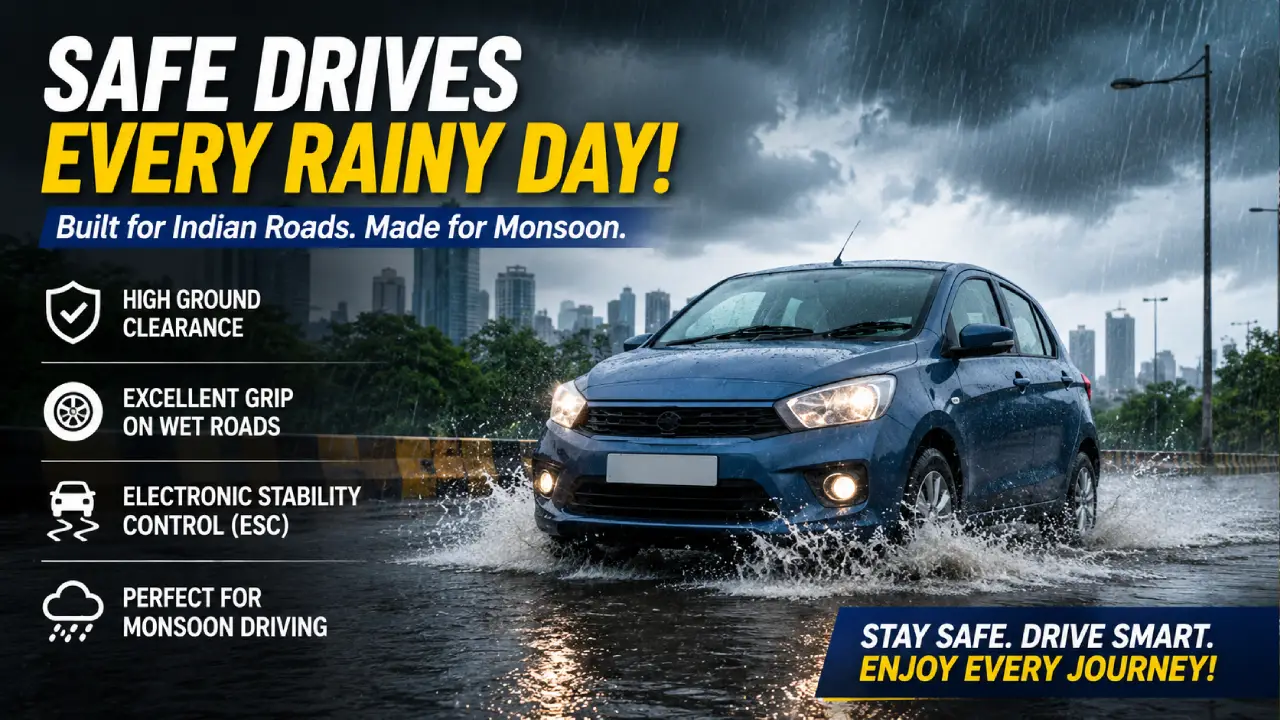
    Fortunately, buyers don’t need to spend a fortune. Several hatchbacks priced below ₹8 lakh now offer features that were once available only in premium vehicles. Electronic Stability Control (ESC), multiple airbags, rear wipers, rear defoggers, and better tyre grip significantly improve driver confidence during wet weather.

    Moreover, these hatchbacks remain affordable to maintain, fuel efficient, and practical for daily commuting, making them excellent choices for Indian families.

    Why Electronic Stability Control Matters During Rain

    Electronic Stability Control, commonly known as ESC, has become one of the most valuable safety technologies for Indian roads. During heavy rain, tyres may lose grip while taking sharp turns or braking suddenly. ESC continuously monitors wheel movement and automatically applies braking force to individual wheels whenever necessary.

    This technology helps prevent skidding, reduces the chances of losing control, and keeps the vehicle stable even on slippery roads. As a result, many experts consider ESC almost as important as airbags for everyday safety.

    Maruti Suzuki has now made ESC standard on popular models like the Celerio and WagonR, giving budget buyers an extra layer of confidence without increasing ownership costs significantly.

    Top 3 Hatchbacks That Perform Well During Monsoon

    While many hatchbacks are available in this price range, three models consistently stand out because of their balanced combination of safety, comfort, practicality, and affordability.

    Car Model Key Safety Features Ground Clearance Ideal For
    Tata Tiago Electronic Stability Control, Dual Airbags, Rear Wiper 170 mm Families seeking stronger build quality
    Maruti Suzuki WagonR ESC, Dual Airbags, Wide Tyres 165 mm City driving with excellent practicality
    Hyundai Grand i10 Nios Six Airbags, ESC, LED DRLs 165 mm Buyers looking for premium safety features

    Tata Tiago Continues to Impress Safety-Focused Buyers

    The Tata Tiago has earned a strong reputation among Indian buyers because of its solid construction and dependable driving experience. Its higher ground clearance of 170 mm allows the vehicle to tackle uneven roads and shallow waterlogging more comfortably than many rivals.

    Additionally, the Tiago offers Electronic Stability Control and essential safety equipment that make rainy-day driving considerably safer. The suspension absorbs potholes well, while its steering remains predictable even on wet roads.

    For families prioritizing occupant protection without stretching their budget, the Tiago remains one of the strongest options available today.

    Maruti Suzuki WagonR Offers Practicality with Better Rainy-Day Confidence

    The Maruti Suzuki WagonR continues to be one of India’s highest-selling hatchbacks, and for good reason. Its tall-boy design provides excellent visibility, which becomes extremely useful during heavy rainfall. Drivers can easily monitor surrounding traffic even when visibility is reduced.

    Moreover, Maruti Suzuki has upgraded the WagonR with Electronic Stability Control (ESC) in its latest models. This feature helps maintain vehicle stability during sudden lane changes or emergency braking on slippery roads. Combined with dual airbags, ABS with EBD, and improved tyre grip, the WagonR becomes a dependable companion for daily commuting during the monsoon.

    The spacious cabin, large boot, and fuel-efficient petrol and CNG engine options further increase its practicality. Therefore, buyers looking for a low-maintenance family hatchback should definitely consider the WagonR.

    Hyundai Grand i10 Nios Delivers Premium Safety in the Budget Segment

    The Hyundai Grand i10 Nios stands out by offering several premium safety features rarely seen in this price category. Hyundai now provides six airbags as standard across most variants, giving occupants enhanced protection in case of an accident.

    Additionally, the car includes Electronic Stability Control, Hill Start Assist, Vehicle Stability Management, rear parking camera, rear defogger, and rear wiper. These features significantly improve confidence while driving through waterlogged streets or slippery highways.

    Besides safety, the Grand i10 Nios offers a refined petrol engine, smooth gearbox options, comfortable suspension, and an upmarket interior. As a result, it appeals to buyers who want a premium ownership experience without moving into a higher price segment.

    Simple Monsoon Driving Tips Every Car Owner Should Follow

    Even the safest hatchback requires careful driving during heavy rain. Therefore, drivers should always reduce speed, maintain a safe distance from other vehicles, and avoid sudden acceleration or hard braking on wet roads.

    Meanwhile, regularly inspect tyre tread depth, brake performance, windshield wipers, and headlamps before the rainy season begins. Proper maintenance plays an equally important role in ensuring road safety.

    If roads are heavily flooded, avoid entering deep water because hidden potholes or engine damage can lead to expensive repairs. Instead, wait until the water level decreases or choose an alternate route whenever possible.

    Should You Buy One Before the Peak Monsoon?

    If you are planning to purchase a new budget hatchback, the current monsoon season is an ideal time to prioritize safety over cosmetic features. Modern safety technologies such as Electronic Stability Control, multiple airbags, and better braking systems provide real-world benefits every single day.

    Among these options, the Tata Tiago is suitable for buyers who value build quality, the WagonR offers unmatched practicality and fuel economy, while the Hyundai Grand i10 Nios delivers premium safety and comfort features at a competitive price.

    Choosing any of these hatchbacks will provide better peace of mind during India’s unpredictable rainy season while also offering excellent value for everyday family use.

    Frequently Asked Questions (FAQs)

    Q1. Which hatchback is best for driving during the monsoon?
    The Tata Tiago, Maruti Suzuki WagonR, and Hyundai Grand i10 Nios are among the best options because they offer essential safety features, good ground clearance, and reliable performance.

    Q2. Is Electronic Stability Control important in budget cars?
    Yes. ESC helps maintain vehicle stability during slippery conditions and significantly reduces the chances of skidding on wet roads.

    Q3. Which hatchback offers the best safety under ₹8 lakh?
    The Hyundai Grand i10 Nios offers six airbags and ESC, while the Tata Tiago is known for its strong build quality and dependable safety package.

  • Rain Alert: Save Your Car Engine from Flood Damage with These Expert Tips

    Rain Alert: Save Your Car Engine from Flood Damage with These Expert Tips

    Mumbai’s heavy monsoon showers have once again flooded several roads, increasing the risk of serious engine damage. If you drive during heavy rain, these expert tips can help you avoid expensive repairs and keep your car safe.

    Mumbai Rain Alert: Why Flooded Roads Can Destroy Your Car Engine

    Several dashcam videos shared during Mumbai’s ongoing rainfall show cars struggling through deep water. Low-ground-clearance sedans are among the most affected, especially in waterlogged underpasses. If possible, avoid flooded roads altogether and choose an alternate route.

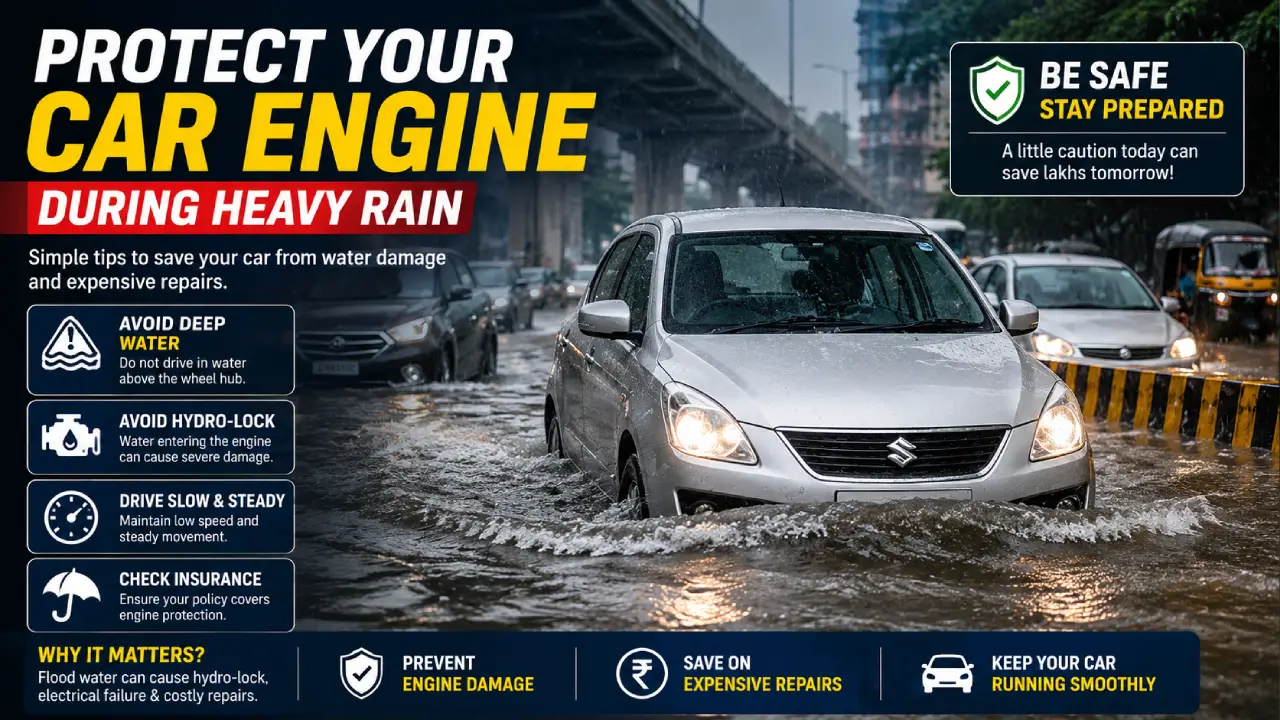
    Many drivers make the mistake of speeding through standing water. However, this creates a large bow wave that can force water into the engine’s air intake. Once water enters the combustion chamber, the engine may suffer hydrostatic lock (hydrolock), one of the most expensive mechanical failures a vehicle can experience.

    Therefore, driving slowly and assessing the water level before entering flooded sections is always the safest approach.

    How to Protect Your Car from Hydrostatic Lock During Monsoon

    Automotive experts recommend following one simple rule: if the water level reaches the center of your wheel hub, avoid driving through it. Moreover, knowing the position of your vehicle’s air intake can help you judge whether it is safe to proceed.

    If you must cross shallow water, maintain a steady speed in a low gear without sudden acceleration. This technique helps prevent water from entering the exhaust system while maintaining consistent engine pressure. On the other hand, stopping midway in deep water significantly increases the chances of engine failure.

    Vehicle Type Risk Level Recommended Action
    Sedan High Avoid driving if water reaches the wheel hub
    SUV Moderate Maintain slow and steady movement in low gear
    Electric Vehicle (EV) Electrical Risk Monitor warning lights and avoid deep water

    Monsoon Driving Tips for Petrol, Diesel, and Electric Cars

    Modern electric vehicles feature sealed battery packs, but they are not designed to operate in deep floodwater. Likewise, petrol and diesel vehicles can also suffer severe engine damage if water reaches critical components.

    If your car stalls in flooded water, never attempt to restart the engine immediately. Instead, switch off the ignition, contact your roadside assistance provider, and arrange professional towing. Restarting a flooded engine may significantly increase repair costs.

    Meanwhile, inspect your tyres, brakes, windshield wipers, and headlights before every journey during the rainy season. These simple checks improve visibility and vehicle control on slippery roads.

    Insurance Tips to Reduce Monsoon Repair Costs

    An Engine Protection Add-on is one of the most valuable insurance upgrades for drivers living in flood-prone cities like Mumbai. This optional cover may help reduce repair expenses caused by water entering the engine.

    Additionally, take photographs of your vehicle if it gets stranded in floodwater. These images can support your insurance claim and help document the cause of the damage. Above all, follow weather advisories and avoid driving through heavily flooded roads whenever possible.

    Safe driving during the monsoon is less about speed and more about patience. A few extra minutes on an alternate route can save you from repair bills worth thousands—or even lakhs—of rupees.

    Frequently Asked Questions

    Q1. What is hydrostatic lock in a car engine?

    Hydrostatic lock occurs when water enters the engine cylinders, preventing the pistons from moving normally. It can cause severe internal engine damage.

    Q2. Should I restart my car after it stalls in floodwater?

    No. Restarting the engine can make the damage worse. Contact roadside assistance and have the vehicle inspected first.

    Q3. Does comprehensive insurance cover flood-damaged engines?

    Many insurers require an Engine Protection Add-on for water-related engine damage. Always check your policy details before the monsoon season.

  • Mumbai Rain Alert! Avoid These Viral Car Hacks or You Could Face Repair Bills Worth Lakhs

    Mumbai Rain Alert! Avoid These Viral Car Hacks or You Could Face Repair Bills Worth Lakhs

    Heavy rainfall in Mumbai has sparked a wave of viral car protection hacks on social media. However, many of these DIY tricks can cause expensive damage instead of protecting your vehicle during the monsoon.

    Mumbai Rain Car Safety: Why Viral DIY Hacks Can Be Dangerous

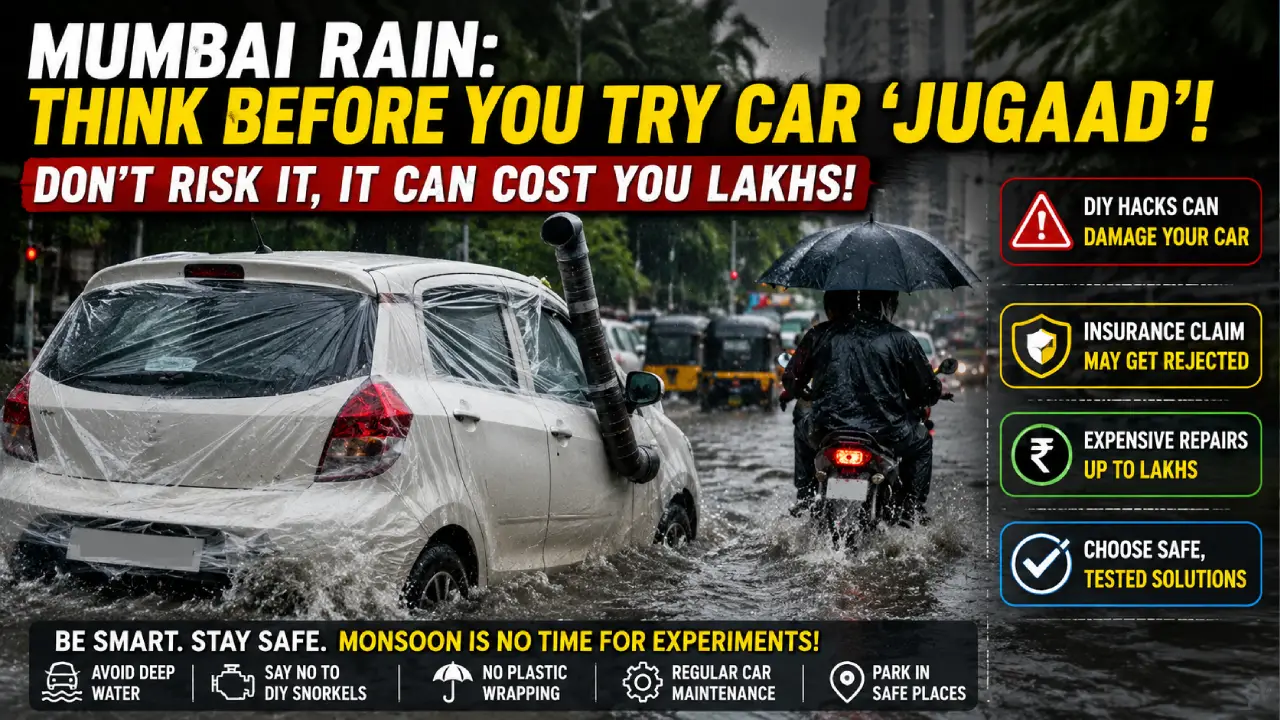
    Mumbai continues to experience heavy rainfall under a red alert, and social media is flooded with videos showing unusual ways to protect cars from floodwater. Some owners wrap their cars in plastic sheets, while others install homemade snorkels or seal doors with waterproof tape. Although these ideas may look clever online, they can create serious mechanical and safety problems.

    Moreover, experts advise car owners to avoid any unauthorized modifications. Modern vehicles are designed with proper drainage, ventilation, and weather-resistant seals. Blocking these systems may do more harm than good during prolonged rainfall.

    Common Monsoon Car Hacks That Can Damage Your Vehicle

    One of the most common tricks is sealing door gaps with waterproof tape. While it may seem helpful, adhesive tape can damage paintwork and rubber seals over time. Similarly, covering the engine bay with plastic restricts airflow and traps heat, increasing the risk of overheating.

    Meanwhile, some drivers even place tape over ORVMs (Outside Rear View Mirrors) to keep them dry. This reduces visibility and creates dangerous blind spots, especially during heavy rain. Professional inspection and manufacturer-approved weather protection remain the safest choices.

    Viral Hack Potential Risk Safer Alternative
    Plastic Wrapping Engine overheating and blocked ventilation Use a breathable waterproof car cover
    Homemade Snorkel Hydro-lock and engine damage Avoid deep water crossings
    Waterproof Tape on Doors Paint and rubber seal damage Replace worn weather strips
    Umbrella on Two-Wheelers Poor balance and accident risk Certified rain riding gear

    Hydro Lock Can Lead to Expensive Repairs

    The biggest threat during monsoon driving is hydro lock. It happens when water enters the engine’s air intake and prevents normal combustion. As a result, internal engine components can suffer severe damage, leading to repair costs that may run into lakhs of rupees.

    Therefore, if your car stalls in deep water, never attempt to restart the engine. Instead, arrange professional towing and have the vehicle inspected at an authorized service center. Parking your vehicle on elevated ground whenever possible is also a smart precaution.

    Insurance Claims May Be Rejected After Unauthorized Modifications

    Another important concern is insurance. Many insurers carefully inspect vehicles after flood-related incidents. If unauthorized modifications or unsafe DIY installations contribute to the damage, your insurance claim could be delayed or even rejected.

    Furthermore, traffic authorities may issue penalties for illegal vehicle modifications that affect road safety. Following the manufacturer’s recommendations is always the safest and most cost-effective approach.

    Best Monsoon Car Care Tips

    Before driving in heavy rain, inspect your wipers, brakes, tyres, headlights, and battery. Drive slowly through waterlogged roads and avoid routes with deep flooding whenever possible. Regular servicing and preventive maintenance offer far better protection than temporary internet hacks.

    As monsoon conditions continue across Mumbai, careful driving and proper vehicle maintenance remain the best ways to protect both your car and your wallet.

    Keywords: Mumbai rain car safety, monsoon car tips, hydro lock in car, car insurance claim, monsoon driving tips, rainy season car maintenance, car hacks to avoid, Mumbai rain alert

    Frequently Asked Questions

    Q1. Can plastic wrapping protect my car during heavy rain?
    No. Plastic wrapping can trap engine heat, block ventilation, and may even damage your vehicle’s paint and seals.

    Q2. What should I do if my car stops in floodwater?
    Do not restart the engine. Call a towing service immediately and get the vehicle inspected to prevent hydro-lock damage.

    Q3. Can DIY modifications affect my insurance claim?
    Yes. Unauthorized modifications may lead to claim disputes or rejection if they contribute to vehicle damage.