
Tag: Latest Car News

  • Ferrari Amalfi Spider vs Aston Martin DB12 Volante: Which ₹5 Crore Convertible Supercar Is Worth Buying in India?

    Ferrari Amalfi Spider vs Aston Martin DB12 Volante: Which ₹5 Crore Convertible Supercar Is Worth Buying in India?

    Introduction: Ferrari has officially introduced the new Amalfi Spider in India, bringing another ultra-luxury convertible to the market. But how does it compare with the Aston Martin DB12 Volante? Here’s a detailed comparison to help luxury car buyers make the right decision.

    The Indian luxury car market continues to expand, and buyers now have more premium choices than ever before. Ferrari’s latest Amalfi Spider has officially entered India, directly challenging the Aston Martin DB12 Volante in the high-end convertible GT segment. Both cars combine breathtaking performance, premium craftsmanship, and open-top driving, but they appeal to different kinds of enthusiasts.

    While Ferrari focuses on razor-sharp handling and an engaging driving experience, Aston Martin emphasizes luxury, elegance, and long-distance comfort. Therefore, choosing between these two iconic convertibles depends on what you expect from your dream sports car.

    Ferrari Amalfi Spider Performance and Engine

    The Ferrari Amalfi Spider comes with a powerful twin-turbocharged V8 engine that delivers thrilling acceleration and an unmistakable Ferrari driving character. Moreover, the lightweight construction and advanced aerodynamics help the car remain agile on both highways and winding roads.

    Ferrari has also equipped the Amalfi Spider with adaptive suspension and an optional suspension lifter, making it more practical for Indian speed breakers and uneven roads. Additionally, the advanced climate control system keeps the cabin comfortable even during extreme summer conditions.

    Aston Martin DB12 Volante Luxury and Comfort

    The Aston Martin DB12 Volante follows a different philosophy. Instead of focusing only on outright performance, it delivers a refined grand touring experience with premium leather upholstery, a luxurious cabin, and exceptional ride comfort.

    Its electrically operated soft-top roof provides excellent insulation while maintaining the classic convertible experience. Moreover, the suspension is tuned for long highway journeys, making it an ideal choice for buyers who value comfort as much as speed.

    Price Comparison in India

    Feature Ferrari Amalfi Spider Aston Martin DB12 Volante
    Expected Price Around ₹4.80 Crore Around ₹4.50 Crore
    Engine Twin-Turbo V8 Twin-Turbo V8
    Waiting Period 12–18 Months 8–12 Months
    Best For Performance Driving Luxury Touring

    Which One Should You Buy?

    If your priority is thrilling performance, sharp handling, and Ferrari’s racing heritage, the Amalfi Spider is the stronger choice. However, if you prefer timeless styling, luxurious interiors, and effortless grand touring comfort, the Aston Martin DB12 Volante deserves serious consideration.

    Both manufacturers also offer premium after-sales support and customized ownership programs for Indian customers. Meanwhile, buyers should remember that on-road prices may increase significantly due to registration charges, insurance, and state-specific taxes.

    Final Verdict

    The Ferrari Amalfi Spider and Aston Martin DB12 Volante represent two different interpretations of the modern luxury convertible. Ferrari delivers excitement, precision, and track-inspired engineering, whereas Aston Martin focuses on elegance, refinement, and everyday grand touring comfort.

    Ultimately, neither car is objectively better than the other. The right choice depends entirely on your driving style, personal taste, and ownership expectations. Regardless of your decision, both convertibles stand among the finest luxury performance cars available in India today.

    FAQs

    Q1. Which car is more expensive?

    The Ferrari Amalfi Spider is expected to be priced slightly higher than the Aston Martin DB12 Volante.

    Q2. Which convertible offers better performance?

    The Ferrari Amalfi Spider is designed with a stronger focus on performance and dynamic handling.

    Q3. Which luxury convertible is better for long-distance touring?

    The Aston Martin DB12 Volante offers a more comfort-oriented driving experience with a premium grand touring cabin.

  • Delhi Heat Alert! Best Hatchbacks Under ₹10 Lakh with Rear AC Vents to Keep Your Cabin Cool

    Delhi Heat Alert! Best Hatchbacks Under ₹10 Lakh with Rear AC Vents to Keep Your Cabin Cool

    Introduction: Looking for a best hatchback that keeps the cabin cool during Delhi’s scorching summer? Here are the best cars under ₹10 lakh that offer rear AC vents, better cooling, and excellent value for money.

    Delhi-NCR has been witnessing intense summer temperatures, making air conditioning one of the most important features while buying a new car. During peak afternoon hours, the front AC alone often takes time to cool the rear seats. This is why hatchbacks equipped with rear AC vents have become increasingly popular among family buyers.

    If your budget is below ₹10 lakh, several hatchbacks nobestw offer rear AC vents along with modern features, impressive mileage, and enhanced passenger comfort. These cars not only cool the cabin faster but also improve overall air circulation, making every journey more comfortable during hot weather.

    Top Hatchbacks with Rear AC Vents Under ₹10 Lakh

    Model Rear AC Vents Starting Price
    Maruti Suzuki Baleno Yes ₹6.70 Lakh*
    Hyundai i20 Yes ₹7.04 Lakh*
    Tata Altroz Yes ₹6.89 Lakh*
    Hyundai Grand i10 Nios Yes ₹5.98 Lakh*

    *Prices are approximate ex-showroom and may vary by city.

    Why Rear AC Vents Matter in Summer

    Rear AC vents allow cool air to reach passengers sitting in the second row much faster than a conventional front-only air-conditioning system. Moreover, they help maintain a uniform cabin temperature, reducing discomfort during long drives.

    Several premium variants of cars like the Tata Altroz and Hyundai i20 also feature heat-rejecting glass, which reduces the amount of sunlight entering the cabin. As a result, the AC system doesn’t need to work as hard, helping improve cooling efficiency and even fuel economy.

    Which Hatchback Offers the Best Value?

    The Maruti Suzuki Baleno remains one of the strongest choices for buyers looking for a spacious cabin, excellent mileage, and low maintenance costs. Meanwhile, the Hyundai i20 appeals to customers who prefer premium interiors, advanced features, and refined driving comfort.

    On the other hand, the Tata Altroz stands out with its solid build quality and impressive safety, while the Hyundai Grand i10 Nios is a practical option for city driving with affordable pricing and comfortable rear-seat cooling.

    Buying Tips Before You Visit the Showroom

    Before making your final decision, take a test drive during the hottest part of the day and check how quickly the cabin cools. Also verify whether the rear AC vents deliver sufficient airflow to second-row passengers.

    Besides cooling performance, buyers should also consider safety features like six airbags, Electronic Stability Control (ESC), rear parking camera, and tyre pressure monitoring wherever available. Additionally, ask the dealership about the latest discounts, exchange bonuses, and waiting periods before booking your preferred model.

    Final Verdict

    If you frequently drive in Delhi-NCR or other regions with extreme summer temperatures, choosing a hatchback with rear AC vents can make a significant difference in everyday comfort. Models like the Maruti Suzuki Baleno, Hyundai i20, Tata Altroz, and Hyundai Grand i10 Nios offer an excellent balance of cooling performance, practicality, mileage, and affordability.

    With prices under ₹10 lakh, these hatchbacks prove that you don’t need to spend a fortune to enjoy premium comfort during India’s hottest months.

    Feature Details
    Budget Under ₹10 Lakh
    Best Feature Rear AC Vents
    Ideal For Family & Daily Commute
    Top Picks Baleno, i20, Altroz, Grand i10 Nios

    FAQs

    Q1. Which hatchback under ₹10 lakh has rear AC vents?

    Maruti Suzuki Baleno, Hyundai i20, Tata Altroz, and Hyundai Grand i10 Nios all offer rear AC vents in selected variants.

    Q2. Do rear AC vents improve cooling?

    Yes. They distribute cool air to rear passengers faster and help maintain a more even cabin temperature.

    Q3. Which car is best for summer driving?

    Baleno and Hyundai i20 are among the best choices thanks to their effective cooling, spacious cabins, and premium comfort features.

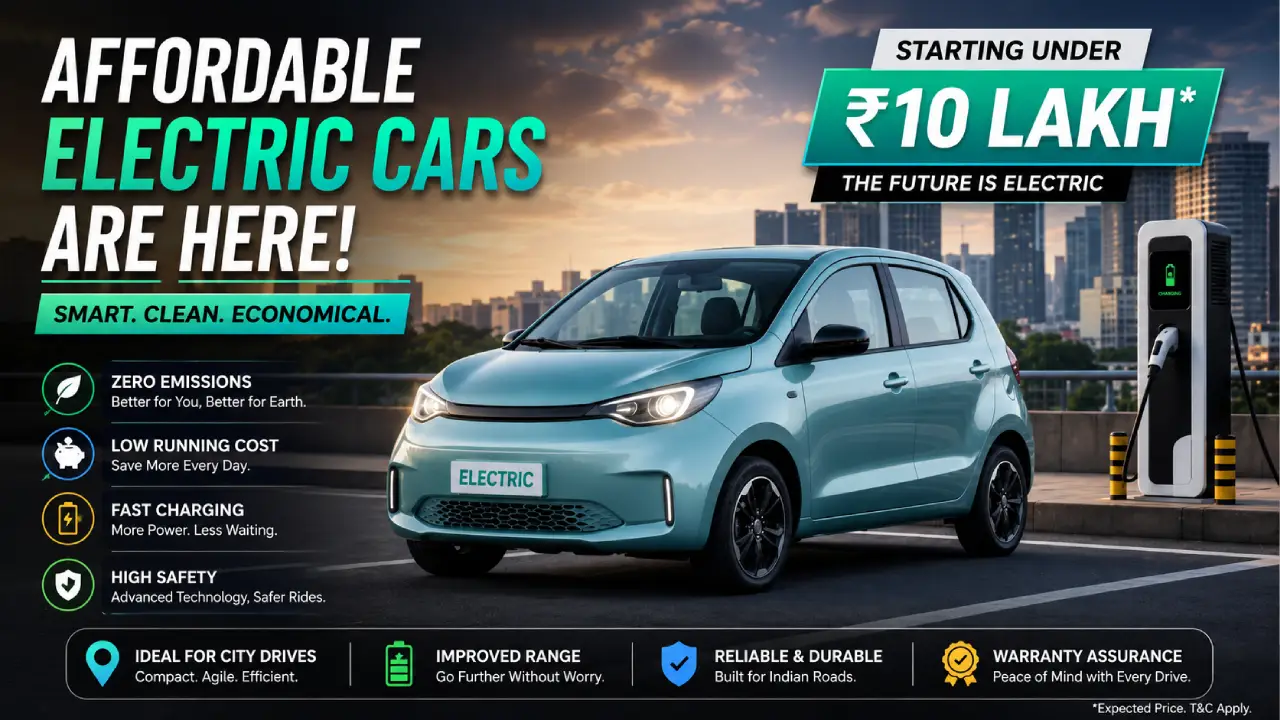
  • Government’s New CAFE-III Rules! Electric Cars Under ₹10 Lakh Could Soon Become Reality

    Government’s New CAFE-III Rules! Electric Cars Under ₹10 Lakh Could Soon Become Reality

    Government’s New CAFE-III Rules! Electric Cars Under ₹10 Lakh Could Soon Become Reality

    India’s new CAFE-III draft norms may encourage carmakers to launch affordable electric cars under ₹10 lakh. Learn how the new rules could affect prices, EV launches, and budget car buyers.

    Introduction: India’s proposed CAFE-III emission norms could reshape the passenger car market by encouraging automakers to launch affordable electric cars under ₹10 lakh. Here’s what the new policy means for buyers.

    India is preparing for another major step toward cleaner mobility. The Government has released the draft framework for the third phase of Corporate Average Fuel Efficiency (CAFE-III) regulations, covering the period from 2027 to 2032. While these rules mainly focus on reducing carbon emissions, they could also create exciting opportunities for budget car buyers.

    Under the proposed framework, automobile manufacturers will face stricter fleet emission targets. As a result, companies may need to increase the number of zero-emission vehicles in their portfolios. Consequently, affordable electric hatchbacks priced below ₹10 lakh could become a stronger business case than ever before.

    For Indian consumers who have been waiting for affordable electric mobility, the upcoming CAFE-III regulations could become a major turning point. Moreover, increased competition among manufacturers may lead to better technology, improved battery efficiency, and more competitive pricing.

    What Are CAFE-III Regulations?

    Corporate Average Fuel Efficiency (CAFE) standards are government regulations designed to reduce the average carbon dioxide emissions produced by vehicle manufacturers. Instead of evaluating individual models, these rules measure the overall emissions generated by a company’s entire passenger vehicle lineup.

    Under the proposed CAFE-III framework, manufacturers selling more electric vehicles are expected to receive additional compliance benefits. These compliance credits can help offset emissions generated by larger petrol-powered SUVs and other conventional vehicles.

    Therefore, electric vehicles are no longer just an alternative product—they are becoming an important part of every automaker’s long-term strategy.

    Why Affordable Electric Cars Could Become More Common

    One of the biggest highlights of the proposed policy is the incentive structure for zero-emission vehicles. Since electric cars help manufacturers improve their fleet emission averages, companies may focus more aggressively on launching affordable EVs.

    Moreover, producing entry-level electric hatchbacks could become financially beneficial when combined with compliance credits. As a result, buyers may soon see several new electric cars priced below ₹10 lakh in the Indian market.

    Manufacturers are also expected to invest more in battery localization, production efficiency, and platform sharing, which can further reduce manufacturing costs.

    How CAFE-III Could Benefit Indian Car Buyers

    The impact of CAFE-III may extend beyond environmental benefits. Budget-conscious buyers could enjoy more choices in the affordable EV segment.

    Some expected advantages include:

    • More electric hatchbacks below ₹10 lakh.
    • Lower daily running costs compared to petrol cars.
    • Improved battery technology.
    • Better charging infrastructure.
    • Increased competition among manufacturers.
    • More attractive finance and EMI options.
    • Lower maintenance expenses over long-term ownership.

    Additionally, manufacturers may introduce multiple variants to attract first-time EV buyers while keeping ownership costs competitive.

    Petrol vs Electric Running Costs

    Running cost remains one of the biggest reasons behind the growing popularity of electric vehicles. Compared to conventional petrol cars, EVs generally cost significantly less per kilometer to operate.

    Fuel Type Estimated Running Cost Impact Under CAFE-III
    Petrol Higher Higher Compliance Pressure
    CNG Moderate Lower Emissions Than Petrol
    Electric Lowest Additional Compliance Benefits

    Consequently, many urban buyers could find electric vehicles more economical for everyday commuting, especially as charging infrastructure continues to improve.

    Which Electric Cars Could Benefit?

    Although manufacturers have not officially announced new products based on CAFE-III, industry experts expect companies like Tata Motors, Mahindra, Hyundai, Maruti Suzuki, MG Motor, and several emerging EV brands to strengthen their affordable electric vehicle portfolios.

    Existing models such as compact electric hatchbacks may receive updated variants, while completely new entry-level EV platforms could also arrive over the next few years.

    What Should Buyers Do Now?

    If you are planning to purchase a new car in the next two or three years, it may be worth keeping an eye on upcoming electric vehicle launches. Manufacturers are likely to reveal new product strategies as the CAFE-III framework moves toward final implementation.

    Meanwhile, buyers should compare battery warranty, charging options, driving range, service network, resale value, and total ownership cost before making a purchase decision.

    Government Invites Public Feedback

    The draft CAFE-III regulations are currently open for stakeholder feedback before the final rules are announced. Automobile manufacturers, industry experts, and consumers can provide suggestions that may influence the final policy framework.

    Once finalized, these regulations are expected to shape India’s passenger vehicle industry between 2027 and 2032, encouraging cleaner technologies and accelerating EV adoption across the country.

    Final Verdict

    The proposed CAFE-III regulations could become one of the biggest catalysts for affordable electric mobility in India. By encouraging manufacturers to reduce fleet emissions through greater EV adoption, the policy may indirectly benefit millions of budget-conscious buyers.

    Although official product announcements are still awaited, the possibility of electric cars priced below ₹10 lakh has certainly become stronger. If manufacturers successfully combine competitive pricing, practical driving range, and reliable charging support, India’s EV market could witness its next major transformation over the coming years.

    Feature Details
    Policy CAFE-III Draft Norms
    Implementation Period 2027–2032 (Proposed)
    Main Focus Lower Fleet Carbon Emissions
    Potential Benefit Affordable Electric Cars
    Expected Price Segment Below ₹10 Lakh

    Frequently Asked Questions

    Q1. What is CAFE-III?

    CAFE-III is the proposed third phase of India’s Corporate Average Fuel Efficiency regulations aimed at reducing vehicle emissions between 2027 and 2032.

    Q2. Will electric cars become cheaper because of CAFE-III?

    While prices are not guaranteed to decrease, the proposed regulations could encourage manufacturers to launch more affordable electric cars to improve compliance.

    Q3. Could electric cars under ₹10 lakh become available?

    Industry expectations suggest that stronger EV incentives under CAFE-III may encourage manufacturers to introduce more budget-friendly electric hatchbacks in the coming years.