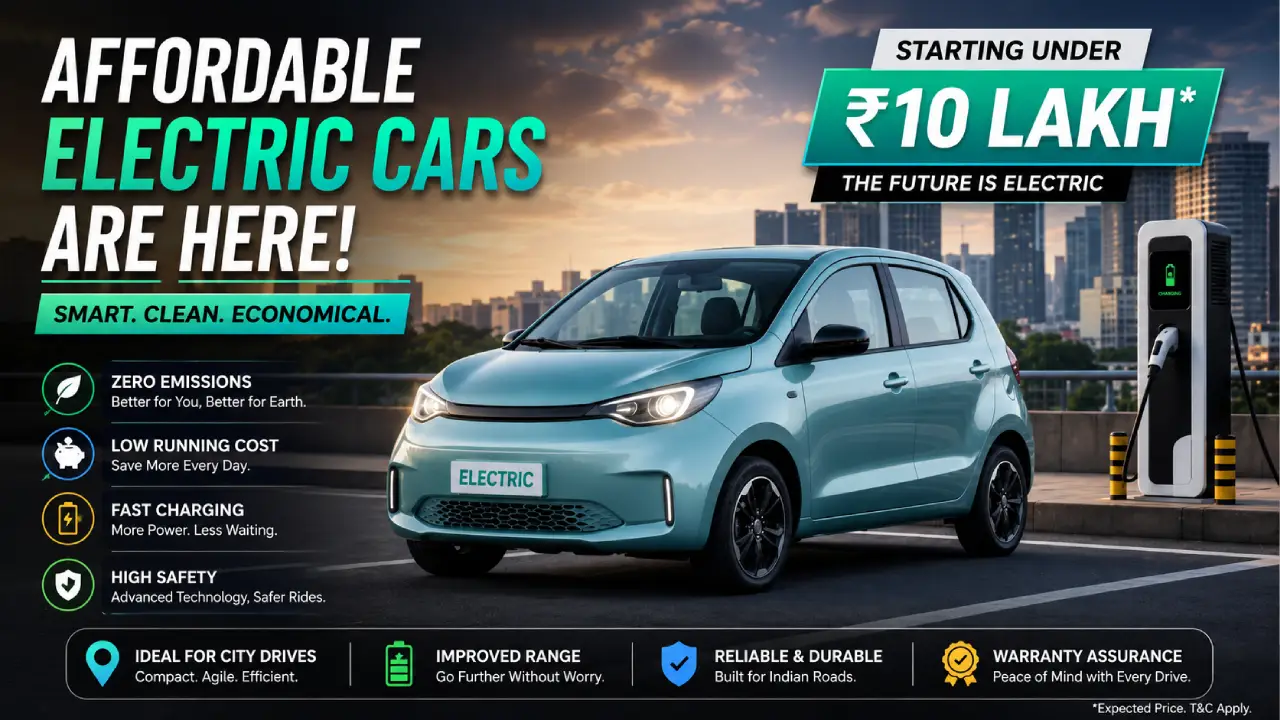
Government’s New CAFE-III Rules! Electric Cars Under ₹10 Lakh Could Soon Become Reality
India’s new CAFE-III draft norms may encourage carmakers to launch affordable electric cars under ₹10 lakh. Learn how the new rules could affect prices, EV launches, and budget car buyers.
Introduction: India’s proposed CAFE-III emission norms could reshape the passenger car market by encouraging automakers to launch affordable electric cars under ₹10 lakh. Here’s what the new policy means for buyers.
India is preparing for another major step toward cleaner mobility. The Government has released the draft framework for the third phase of Corporate Average Fuel Efficiency (CAFE-III) regulations, covering the period from 2027 to 2032. While these rules mainly focus on reducing carbon emissions, they could also create exciting opportunities for budget car buyers.
Under the proposed framework, automobile manufacturers will face stricter fleet emission targets. As a result, companies may need to increase the number of zero-emission vehicles in their portfolios. Consequently, affordable electric hatchbacks priced below ₹10 lakh could become a stronger business case than ever before.
For Indian consumers who have been waiting for affordable electric mobility, the upcoming CAFE-III regulations could become a major turning point. Moreover, increased competition among manufacturers may lead to better technology, improved battery efficiency, and more competitive pricing.
What Are CAFE-III Regulations?
Corporate Average Fuel Efficiency (CAFE) standards are government regulations designed to reduce the average carbon dioxide emissions produced by vehicle manufacturers. Instead of evaluating individual models, these rules measure the overall emissions generated by a company’s entire passenger vehicle lineup.
Under the proposed CAFE-III framework, manufacturers selling more electric vehicles are expected to receive additional compliance benefits. These compliance credits can help offset emissions generated by larger petrol-powered SUVs and other conventional vehicles.
Therefore, electric vehicles are no longer just an alternative product—they are becoming an important part of every automaker’s long-term strategy.
Why Affordable Electric Cars Could Become More Common
One of the biggest highlights of the proposed policy is the incentive structure for zero-emission vehicles. Since electric cars help manufacturers improve their fleet emission averages, companies may focus more aggressively on launching affordable EVs.
Moreover, producing entry-level electric hatchbacks could become financially beneficial when combined with compliance credits. As a result, buyers may soon see several new electric cars priced below ₹10 lakh in the Indian market.
Manufacturers are also expected to invest more in battery localization, production efficiency, and platform sharing, which can further reduce manufacturing costs.
How CAFE-III Could Benefit Indian Car Buyers
The impact of CAFE-III may extend beyond environmental benefits. Budget-conscious buyers could enjoy more choices in the affordable EV segment.
Some expected advantages include:
- More electric hatchbacks below ₹10 lakh.
- Lower daily running costs compared to petrol cars.
- Improved battery technology.
- Better charging infrastructure.
- Increased competition among manufacturers.
- More attractive finance and EMI options.
- Lower maintenance expenses over long-term ownership.
Additionally, manufacturers may introduce multiple variants to attract first-time EV buyers while keeping ownership costs competitive.
Petrol vs Electric Running Costs
Running cost remains one of the biggest reasons behind the growing popularity of electric vehicles. Compared to conventional petrol cars, EVs generally cost significantly less per kilometer to operate.
| Fuel Type | Estimated Running Cost | Impact Under CAFE-III |
|---|---|---|
| Petrol | Higher | Higher Compliance Pressure |
| CNG | Moderate | Lower Emissions Than Petrol |
| Electric | Lowest | Additional Compliance Benefits |
Consequently, many urban buyers could find electric vehicles more economical for everyday commuting, especially as charging infrastructure continues to improve.
Which Electric Cars Could Benefit?
Although manufacturers have not officially announced new products based on CAFE-III, industry experts expect companies like Tata Motors, Mahindra, Hyundai, Maruti Suzuki, MG Motor, and several emerging EV brands to strengthen their affordable electric vehicle portfolios.
Existing models such as compact electric hatchbacks may receive updated variants, while completely new entry-level EV platforms could also arrive over the next few years.
What Should Buyers Do Now?
If you are planning to purchase a new car in the next two or three years, it may be worth keeping an eye on upcoming electric vehicle launches. Manufacturers are likely to reveal new product strategies as the CAFE-III framework moves toward final implementation.
Meanwhile, buyers should compare battery warranty, charging options, driving range, service network, resale value, and total ownership cost before making a purchase decision.
Government Invites Public Feedback
The draft CAFE-III regulations are currently open for stakeholder feedback before the final rules are announced. Automobile manufacturers, industry experts, and consumers can provide suggestions that may influence the final policy framework.
Once finalized, these regulations are expected to shape India’s passenger vehicle industry between 2027 and 2032, encouraging cleaner technologies and accelerating EV adoption across the country.
Final Verdict
The proposed CAFE-III regulations could become one of the biggest catalysts for affordable electric mobility in India. By encouraging manufacturers to reduce fleet emissions through greater EV adoption, the policy may indirectly benefit millions of budget-conscious buyers.
Although official product announcements are still awaited, the possibility of electric cars priced below ₹10 lakh has certainly become stronger. If manufacturers successfully combine competitive pricing, practical driving range, and reliable charging support, India’s EV market could witness its next major transformation over the coming years.
| Feature | Details |
|---|---|
| Policy | CAFE-III Draft Norms |
| Implementation Period | 2027–2032 (Proposed) |
| Main Focus | Lower Fleet Carbon Emissions |
| Potential Benefit | Affordable Electric Cars |
| Expected Price Segment | Below ₹10 Lakh |
Frequently Asked Questions
Q1. What is CAFE-III?
CAFE-III is the proposed third phase of India’s Corporate Average Fuel Efficiency regulations aimed at reducing vehicle emissions between 2027 and 2032.
Q2. Will electric cars become cheaper because of CAFE-III?
While prices are not guaranteed to decrease, the proposed regulations could encourage manufacturers to launch more affordable electric cars to improve compliance.
Q3. Could electric cars under ₹10 lakh become available?
Industry expectations suggest that stronger EV incentives under CAFE-III may encourage manufacturers to introduce more budget-friendly electric hatchbacks in the coming years.