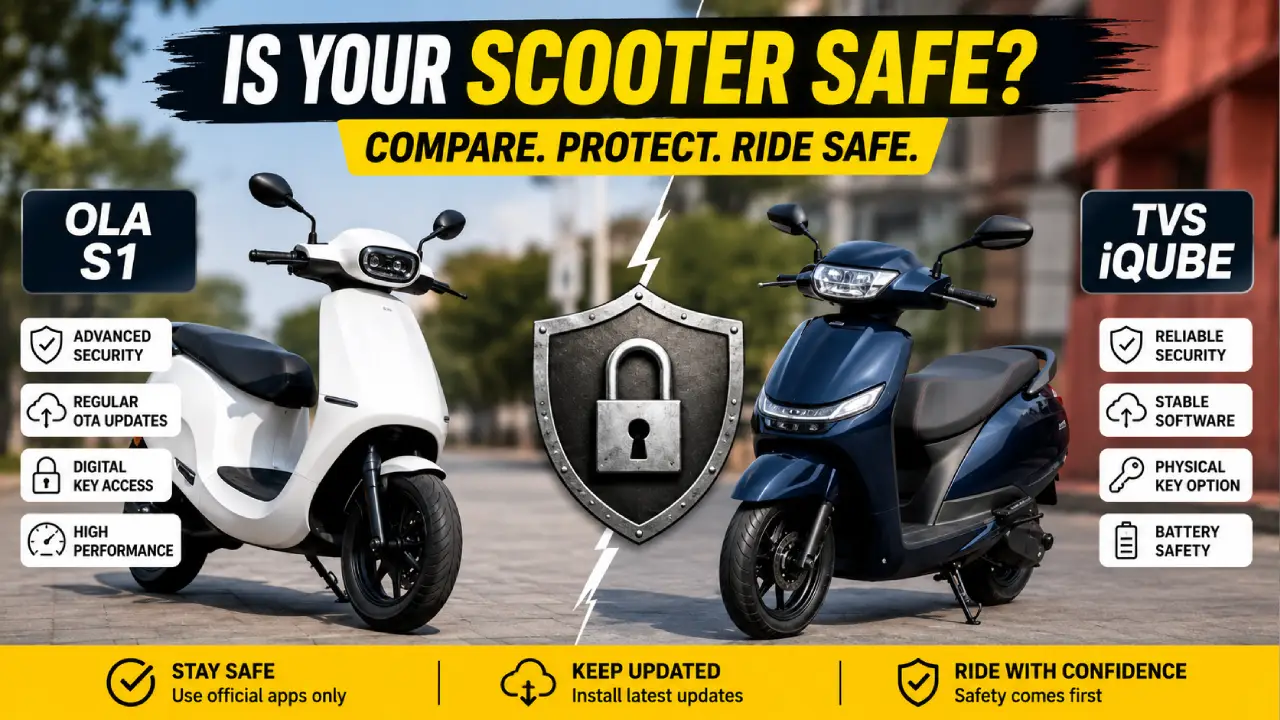
Buying an electric scooter today isn’t just about range and performance. With the latest government security guidelines, digital safety, software updates, and battery protection have become equally important for every EV buyer.
Ola S1 vs TVS iQube: Why Security Matters More Than Ever
The Government has introduced stricter security measures for connected electric vehicles following concerns over unauthorized battery management applications and reports of remote access attempts. As a result, manufacturers are now expected to strengthen software security and improve user protection.
If you’re comparing the Ola S1 and TVS iQube, it’s important to consider not only performance and features but also how each scooter protects your data and vehicle. Moreover, connected EVs now require stronger authentication methods to reduce cybersecurity risks.
Ola S1 vs TVS iQube: Security Features and OTA Updates
Digital security depends on how safely the scooter communicates with your smartphone and cloud services. The Ola S1 offers a highly connected experience through its MoveOS platform, providing features like Digital Key, smartphone controls, and over-the-air (OTA) software updates.
On the other hand, the TVS iQube follows a more balanced approach with a closed software ecosystem and conventional key access alongside connected features. Therefore, many users may find it easier to operate even if the mobile application is temporarily unavailable.
To stay protected, experts recommend using only the manufacturer’s official mobile application and avoiding third-party software that requests unnecessary permissions.
Price Comparison of Ola S1 and TVS iQube
| City (Estimated) | Ola S1 Pro On-Road Price | TVS iQube ST On-Road Price | Average Monthly EMI |
|---|---|---|---|
| Delhi | ₹1,42,000 | ₹1,48,000 | ₹4,200 |
| Mumbai | ₹1,51,000 | ₹1,55,000 | ₹4,500 |
| Bengaluru | ₹1,53,000 | ₹1,57,000 | ₹4,600 |
Battery Protection and Monsoon Safety Tips
Both electric scooters come with IP67-rated battery and motor protection, making them suitable for everyday riding in wet conditions. However, riders should still avoid deep water crossings and inspect the charging port before plugging in the charger.
Meanwhile, installing the latest firmware updates can improve battery management, sensor calibration, and overall system stability. Regular software updates also help manufacturers fix security vulnerabilities and enhance the riding experience.
Which Electric Scooter Should You Choose?
The right choice depends on your priorities. If you prefer advanced connected features, a modern interface, and frequent software improvements, the Ola S1 offers an excellent smart mobility experience.
However, if you value simplicity, reliability, and a familiar ownership experience, the TVS iQube is a practical option for daily commuting and family use. Before purchasing either scooter, ask your dealer to confirm that the latest firmware version has been installed.
Finally, always review app permissions regularly, disable Bluetooth auto-connect when not required, and download updates only through official manufacturer apps. Following these simple digital safety practices will help keep your electric scooter secure.
Frequently Asked Questions (FAQs)
Q1. Which electric scooter offers better digital security?
Both scooters offer secure connected features. However, using official apps and keeping the latest firmware installed is essential for maximum protection.
Q2. Are Ola S1 and TVS iQube safe to ride during the rainy season?
Yes. Both models feature IP67-rated battery and motor protection, but riders should avoid waterlogged roads and inspect the charging port before charging.
Q3. Should I install every OTA software update?
Yes. Official OTA updates often include bug fixes, security improvements, battery optimization, and performance enhancements.